Wine may be France’s most famous culinary export, but it’s hardly alone. The French have plenty of protected designations: for cheese, of course, but also for chicken, mustard, lentils, ham, oysters, butter, nuts and even salt. One of the pleasures of spending time in France is discovering the distinctive foods each region proudly produces.
Normandy is a beautiful rural region along the English Channel coast in northern France. Along with scallops, oysters, butter, and a magnificent cheese called Pont l’Evêque, Normandy is renowned for its cider. Apples and pears have been grown, pressed and fermented here for more than a thousand years – an ancient product of the rugged coastal landscape. About a decade ago we imported some tasty ciders from neighboring Brittany, and we’re delighted to announce that this year we’re giving the genre another try.
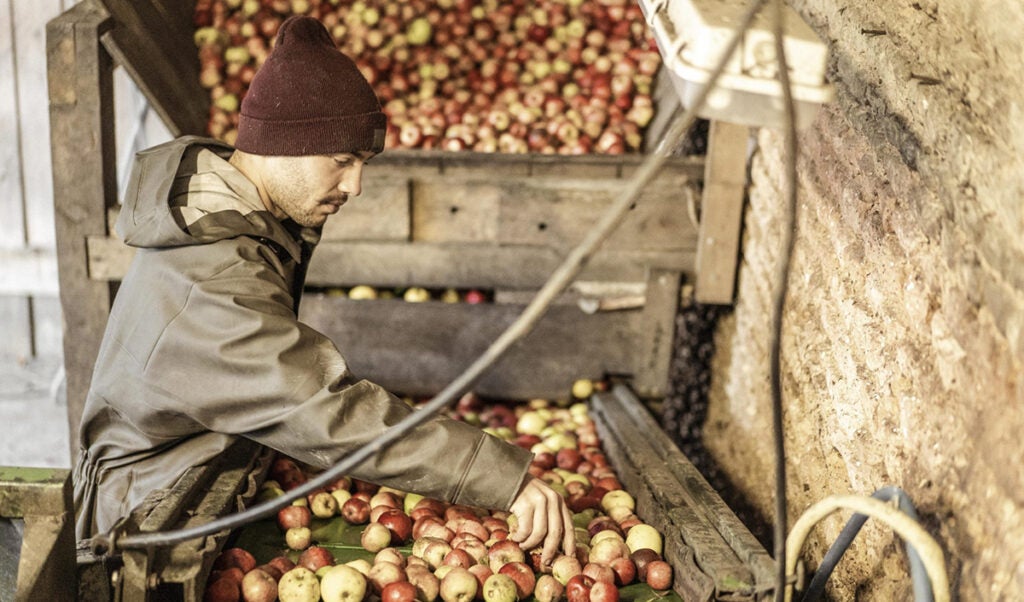
Cyprien Lireux is a thirtysomething artisan cidermaker who left business school and decided to return home to work his ancestral land. His father and grandfather had taught him the art of cidermaking from the apples of their small family farm, and upon his return Cyprian began producing and selling cider commercially. He’s since purchased several small local abandoned orchards, and expanded production further.
He sent us samples this spring and we tried them alongside a range of domestic and French ciders for comparison. The Lireux ciders were tasters’ universal favorites, and we’re delighted to introduce them to our lineup. They’ll be featured in July Futures out next Sunday, but we’re offering an early look at them today. We expect these to arrive in September, just in time for autumn enjoyment.
Norman ciders and American craft ciders diverge in several important ways, but chiefly in the types of apples used. American cidermakers mostly use native sweet apples (Macintosh, Empire, Cortland, etc), but Norman cidermakers use apples most people would find inedible if eaten raw. There are thousands of ancient apple varieties across France, usually classified into four types: sweet, bittersweet, bitter and sharp. The ciders made from these apples are less about sweetness and more about tension and texture – they result in crisp glasses that are very dry, and relatively low in alcohol.
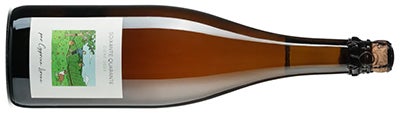
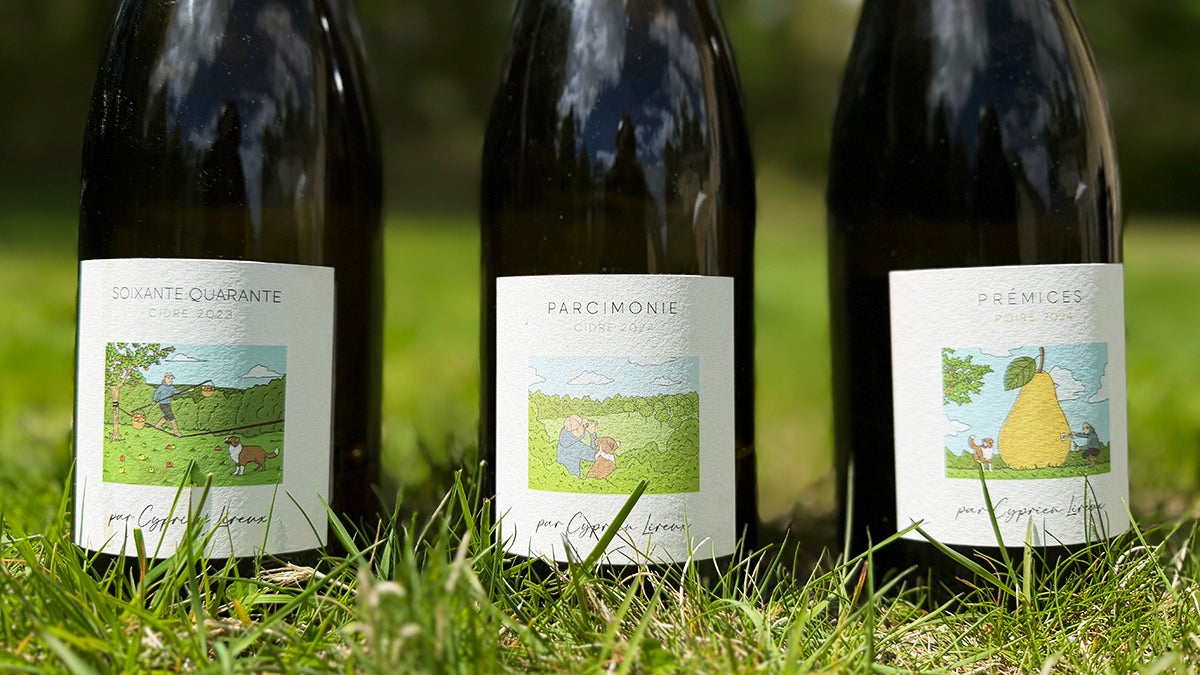
Our first suggestion is called “Soixante.Quarante,” named for the 60/40 proportion of sharp vs. bitter apples. This was our tasters’ favorite – bone dry, pleasantly herbal and savory in the nose, with great tension in the mouth. There’s a delicate salinity alongside notes of lemon peel and quince with a hint of bitterness. A faint tannin underlies the mouthfeel, and at 6.5% abv it’s lively and easy to enjoy. Its wine equivalent is probably a very dry Petit Chablis. Serve this with grilled fish, mussels, or roasted chicken.
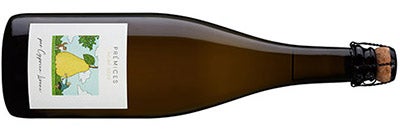
Our second pick, called “Premises” is a perry, made from seven different heritage varieties of pear, and just as dry as the Soixante.Quarante cider. It’s brighter and prettier than the cider, with notes of lime, grapefruit, dried flowers, and a pleasant minerality. It’s more wine-like than the cider, and the match of zesty fruit and brinyness is really delicious. For a wine comparison we’d look to Muscadet; this poiré clocks in at 4.5% alcohol. Pair with sushi, tuna tartare, steamer clams, or fresh goat cheese.
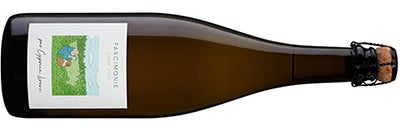
Finally, back in the cider category, we’re suggesting Cyprien’s “Parcimonie” cuvée. It’s a more serious cider – the apples undergo a 2-4 week maturation in wood crates before pressing – and shows more complexity than the 60/40. Cyprien sources 20 different varieties of apple from twelve different vineyards; roughly 25% each from the four categories (sweet, bittersweet, bitter and sharp). This has a deeper nose than the 60/40, with more fruit and woodsy notes. (One of our tasters even noted eucalyptus.) At 5.7% alcohol it’s still dry and zippy, but has just a splash of residual sugar – not enough to be considered off-dry, but more than the first two. Think Brut for this one, and Extra-Brut for the first two. For a wine comparison, we’d pick a mostly dry Chenin blanc. This should drink well on its own, or with fresh soft pretzels.
All of these come in 750ml bottles, and all three are $235/case. We don’t anticipate cider will become a substantial part of the Ansonia portfolio, but we were really taken with these – and with all under $20/bot, they’re ripe for experimentation. Available by the case, or a sampler pack of 4 each; quantities uncertain, these may sell out – if still available next week we’ll include in Futures.
______________
Lireux Cidre 60/40: $235/case
Lireux Poiré: $235/case
Lireux Cidre Parcimonie: $235/case
Lireux Sampler (4 each): $235/case
Email Tom to order: orders@ansoniawines.com