
Filters Sort results
Reset Apply
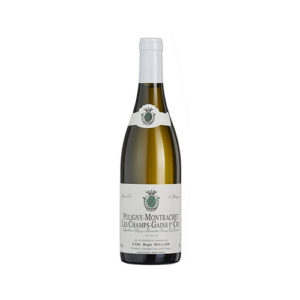 | Roger and Julie Belland are 5th and 6th generation growers in Santenay -- their… More (+) Roger and Julie Belland are 5th and 6th generation growers in Santenay -- their wines are perennial favorites among our readers, offering early drinking and friendly pricetags. Belland’s are always delicious and precocious, but in 2020 they’re even better than usual.This wine is very much a Puligny, giving up a bit of Chassagne’s weight for a racy elegance. The fruit and floral notes are carefully channeled across a long, very intense palate. It will need some time to develop, but its dry freshness should soften just as the floral notes in the nose begin to assert themselves and the white peach and lemon fruit melt together. Less (-) Free US Shipping | |
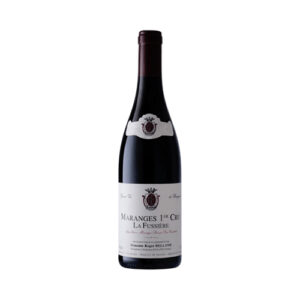 | At the Domaine Roger Belland, the domaine is located in Santenay, a town more… More (+) At the Domaine Roger Belland, the domaine is located in Santenay, a town more known for its reds than its whites, but with a flagship monopole in Chassagne-Montrachet’s Morgeot sector, the Clos Pitois. We have chosen the wines that lead the pack here, from both red and white vineyards across the southern Côte d’Or.Belland’s Maranges from the Fussière premier cru offers solid, well-made Côte d’Or Burgundy at an excellent price. There’s a little more extraction than usual in the 2024 vintage, making for a much denser purple colour and a deep dark pinot. Those whose taste runs more to ripe blueberries and black currants will be pleased. It’s pretty big wine for such a modest appellation, with a friendly pricetag, and should drink well from the time it arrives. Less (-) Free US Shipping | |
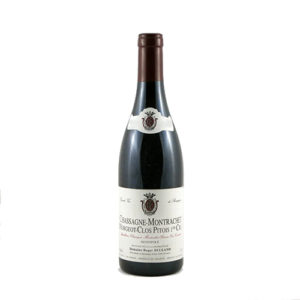 | “Beautiful and bountiful,” writes Jasper Morris of the 2022 red Burgundies; “very good wines… More (+) “Beautiful and bountiful,” writes Jasper Morris of the 2022 red Burgundies; “very good wines and plenty of them.” William Kelley calls them “succulent, suave and charming”, “offering excellence in both colors and in a wide variety of styles.” Roger Belland's reds are entirely classic, with ripe modern fruit but traditional, low-alcohol textures.The Chassagne 1er cru Clos Pitois is the family's monopole vineyard. The red delivers a dense, tightly packed structure and exceedingly fine grained, very ripe tannins. Its dark, beautifully ripe fruit unfolds slowly in the glass, hinting at fine things to come as the wine evolves. We expect this wine to age beautifully, hitting its stride in four or five years Less (-) Free US Shipping | |
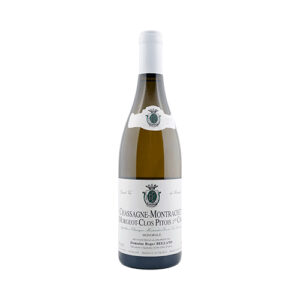 | Belland’s Chassagne 1er cru Clos Pitois blanc is from a large monopole in the Morgeot… More (+) Belland’s Chassagne 1er cru Clos Pitois blanc is from a large monopole in the Morgeot sector along the border with Santenay. Like other whites from Morgeot, this is an opulent and powerful wine, rich and mouthfilling, with plenty of concentration. There is ripe orchard fruit with a floral overlay, and the flavors persist well on the palate. No shrinking violet, this Clos Pitois blanc has the substance to stand up to dishes with robust flavors. Less (-) Free US Shipping | |
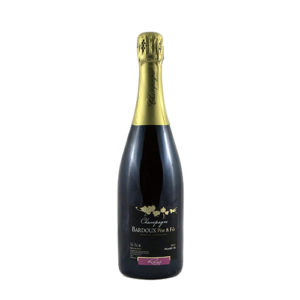 | Bardoux’s Rosé Champagne is two thirds Pinot Meunier and Pinot Noir, and one third… More (+) Bardoux’s Rosé Champagne is two thirds Pinot Meunier and Pinot Noir, and one third Chardonnay. The two dark grapes give gorgeous dry fruit (and color), and the Chardonnay adds freshness and length. This cuvée sits on the lees for three years before disgorgement; only 150 cases made each year.The nose is intense and fresh, with strawberries, crème brûlée, and apple pie. The mouth is crisp and dry but full of springy fruit; wild cherries and roses. Less (-) Free US Shipping | |
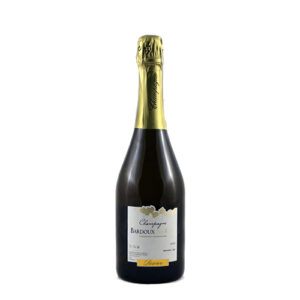 | Pascal’s newest cuvée, called “Reserve 2014,” is essentially the Brut Traditionnel cuvée, but left… More (+) Pascal’s newest cuvée, called “Reserve 2014,” is essentially the Brut Traditionnel cuvée, but left on the lees for an extra half-decade; the base cuvée comes from the 2014 vintage. Champagne, you’ll remember, undergoes two fermentations – a first in tanks (like any other wine), and then a second in bottle under bottlecap. After the second fermentation is complete, the winemaker may choose to disgorge (remove yeast and insert a cork) promptly, or hold for longer “on the lees.” The extra time on the lees has transformed the wine into something extraordinary, far closer to his vintage champagne than the more humble Traditionnel. The wine shows an exquisite array of chalk, fruit, earth and toast. The mouth is subtle and long, with a delicious, vinous finish. Less (-) Free US Shipping | |
 | Now 18 years on from harvest, this wine is old enough to vote (no… More (+) Now 18 years on from harvest, this wine is old enough to vote (no word on its political preferences), but it’s remarkably youthful. We recently enjoyed one of the last magnums of our 2002 from Bardoux, which was mature and delicious but not the least bit tired. The 2004 vintage produced wines with a bit more structure, and these recently disgorged magnums have the capacity for plenty of additional cellaring.The blend is 20% Pinot Meunier, 30% Pinot Noir, and 50% Chardonnay, with an 8g/L dosage. The nose is terrific, with woodsy, savory notes alongside the pear fruit. In the mouth is chalky and fine, with an astonishing level of vibrancy for its age. Look for notes of rhubarb, cooked apples and raspberry across a beautifully textured palate. Less (-) Free US Shipping | |
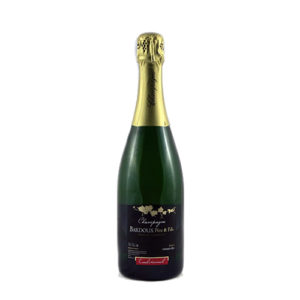 | Bardoux’s Brut Traditionnel is his non-vintage cuvée, and an excellent entree to the collection… More (+) Bardoux’s Brut Traditionnel is his non-vintage cuvée, and an excellent entree to the collection. A blend of 60% Pinot Meunier, 30% Chardonnay and 10% Pinot Noir, this wine has the complexity and depth to match the finest bottles from Burgundy or Bordeaux. This year’s Traditionnel contains wine mostly from 2012, and we found it even better than last year’s. The nose shows plum and lemon and buttered biscuits; the mouth is dry, elegant, and smooth, with notes of apple and toast. Less (-) Free US Shipping |