Summer Supply Cases: $250/case
We tend to drink simply in the summer. Some summer moments call for grand bottles — weddings, graduations, etc. But when we think of “summer wine,” it’s something refreshing, uncomplicated, and inexpensive.
We’d bet that many readers have garages bigger than the Domaine Malmont’s winemaking space. We work with some small-production winemakers, but even by our standards Malmont’s winery is tiny. The space attached to winemaker Nicolas Haeni’s house in Séguret looks more like a large tool shed than a winemaking operation.
Perched where the Loire river meets the windswept Atlantic coast, Muscadet has long been a source for a classic, dry white wine. Served by the carafe in the oyster bars of Paris and London for decades, it’s refreshing, abundant, and inexpensive — a perfect glass to wash down a plate of crustaceans.
“Oaked” or “unoaked” sounds like a yes-no question, but it really is a range. Most of the wines we import spend some time in oak, but the strength of its influence depends on the age and size of the barrel, the chauffe (how heavily the inside is charred), and time in the barrel.
Rosé’s popularity shows no signs of ebbing. We generally steer clear of winemaking fads, but even for us traditionalists it’s hard to deny the tastiness of cool rosé under a warm sun. Our criteria for rosé are threefold: dry, inexpensive, and refreshing.
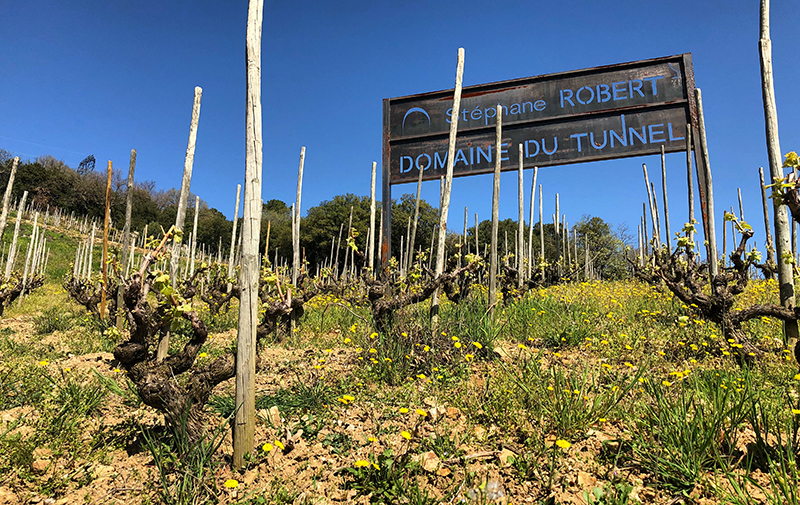
In much of the world, Syrah is a powerful grape that produces soft wines with jammy fruit and low tannin. But in Northern Rhône Valley, the grape takes on an entirely different style. Grown at its northern ripening limit, Syrah finds a more elegant and balanced expression on the steep banks of the Rhône River south of Lyon.
The 2015 red Burgundies are nothing short of a sensation. After months of hype and a frenzy of enthusiasm upon release, they’ve lived up to nearly all of their acclaim. With sturdy tannins suggesting long and happy lives, the wines also offer near-term hedonistic delight — the best are juicy, lively, and, as the French say, gouleyant (gulpable).
Summer’s arrival means more rosé and white in our glasses. But sometimes a meal or a houseguest or a whim requires red — and in those circumstances we like to have something straightforward, affordable and refreshing. Pinot Noir is an easy choice, but for something a bit different we often turn to the Loire. They […]
The wines of Meursault may be popular today, but it’s hard to describe them as a passing fad. The monks of Citeaux first planted vines there in 1098, and over the last nine centuries the village has proudly earned its glowing reputation. Though it has no Grand Cru vineyards, Meursault’s wines are among the most sought after in the world.
After a long and snowy winter, it seems Spring (or maybe summer) has at last arrived in the northeast. We avoid rigid rules for seasonal drinking — sometimes the moment calls for Chablis in December, or a Châteauenuf in June. But with the arrival of warm, sunny days, we find ourselves reaching for a certain style of wine.
For years we’ve searched for a Cornas producer to add to our portfolio. The appellation is tiny (only 145 hectares, compared with Châteauneuf-du-Pape’s 3,133) and a wave of popularity in recent years has made it difficult to get an appointment. But luck was on our side last week, and we’re excited to report that we’ve found not one Cornas source but two.
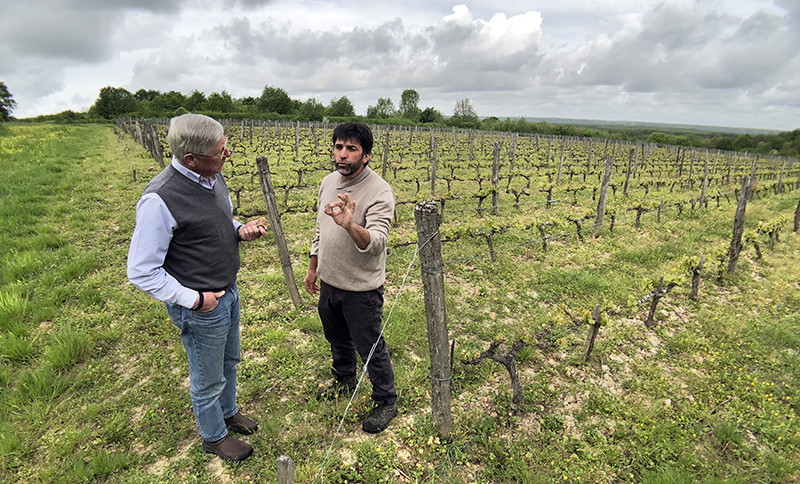
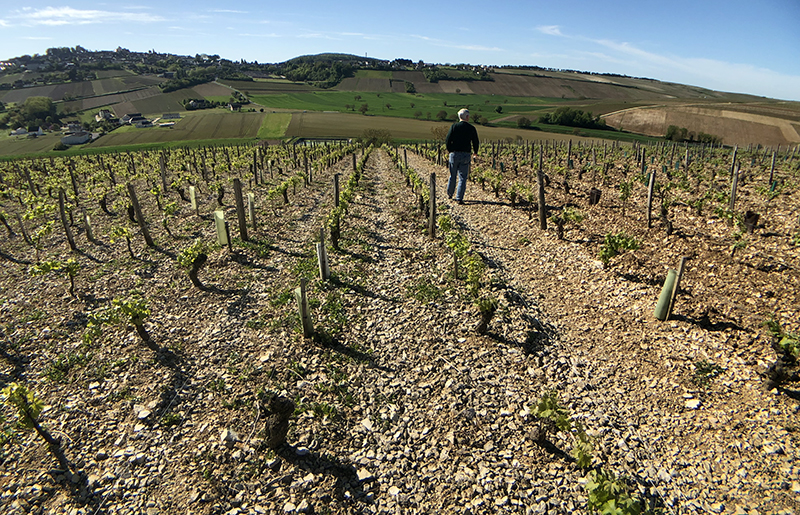
Yesterday afternoon we visited Frederic Michot, our winemaker in Pouilly-Fumé in the Loire Valley. After our tasting he took us on his tour of his vines, all Sauvignon blanc planted on the banks of the Loire.
Morey-St-Denis is a tiny town. After our tasting yesterday at the Domaine Amiot, we strolled a few hundred yards down the town’s main street to lunch with Chantal and Jean-Louis. In a four minute walk we paused half a dozen times to exchange greetings with neighbors and friends, and then got waves and handshakes from nearly everyone in the restaurant. There may be only 680 inhabitants in the town, but everyone knows the name Amiot.